
If you’re searching for a water immersion heater 30 ft long (often mentioned as “30 ft long” or “30 feet immersion”), you’re likely trying to solve one of these practical problems:
- keeping a long water tank at a stable temperature
- heating water in applications where steam coils or direct gas heating aren’t convenient
- achieving consistent heating along the entire length rather than only near the heater inlet
- reducing temperature variations in long recirculation systems
This guide explains the concept of water immersion heating for long lengths, what to look for in 30 ft heaters, common concerns, and how to avoid costly mistakes.
---
1) What “water immersion heater 30 ft long” really means
A 30 ft long water immersion heater is designed to transfer heat into water while the heating element remains submerged (immersed) for most or all of its operating length.
In long tanks, the challenge is not only generating heat—it’s ensuring that:
- the heat is distributed evenly
- the heater operates within safe electrical and thermal limits
- the structure can handle water exposure, pressure, and vibration
- control systems prevent overheating at weak points
In many real-world industrial setups, 30 ft heaters are used in process water heating, tank warming, preheating loops, and temperature maintenance for long vessels.
---
2) Types of immersion heating (and why type matters)
When people say “water immersion heater,” they may be thinking about different heater technologies. The most common categories are:
A) Electric resistive immersion heaters
These are classic immersion heaters where electrical energy becomes heat via a resistive element. They’re used widely because of:
- straightforward installation
- controllability with thermostats/thermostatic controls
- predictable operation
Key concern: scale and corrosion effects over time, especially for hard water.
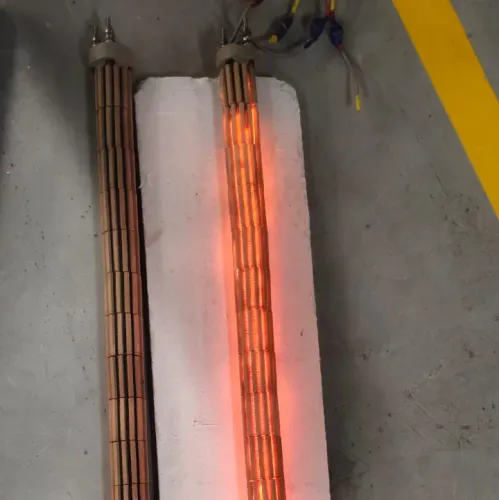
B) Infrared (IR) radiant heating for water systems (when applicable)
In some setups, IR radiant systems are used for water-related heating where radiant transfer or specialized configurations are involved. These systems can be designed for robust industrial operation with temperature-controlled control systems.
Key concern: IR setups must still be engineered correctly for the specific water arrangement and heat transfer requirement—radiant heating is not automatically “better” unless it matches the application physics.
C) Steam or hot-oil coils
These are not “immersion electric heaters,” but you may be comparing options. Coils can be effective, but they shift complexity to steam supply, condensate management, and maintenance.
---
3) How a long immersion heater (30 ft) distributes heat
A 30 ft heater behaves differently from a short immersion element. Heat transfer depends on:
- Water flow / circulation: stagnant water creates hot spots.
- Tank geometry: how the heater is positioned affects convection and mixing.
- Element spacing and insulation: affects thermal uniformity.
- Heat-up method: step controls vs. full power impacts stability.
- Scaling: buildup increases thermal resistance, raising element temperature.
Common result of poor distribution
If heat isn’t evenly managed, you can see:
- temperature stratification (top hotter than bottom)
- element hot spots
- earlier failure due to localized overheating
---
4) Critical selection factors for a 30 ft immersion heater
When specifying a 30 ft long water immersion heater, focus on these requirements early:
1) Electrical design and watt density
Long heaters often include multiple electrical zones or segments. You should confirm:
- heater power rating (kW)
- voltage/frequency compatibility
- watt density (W/cm²) to reduce overheating risk
- how the design prevents hot spots
2) Materials and water compatibility
Water immersion demands materials that resist:
- corrosion (especially with chlorides or treated water)
- scale formation and cleaning cycles
- long-term exposure without degrading seals or insulation
3) Mechanical strength and mounting
A 30 ft heater experiences:
- weight and thermal expansion
- vibration from water movement
- stresses from installation and supports
You’ll want guidance on mounting supports, expansion allowance, and cable routing to prevent premature wear.
4) Control system strategy
Long heaters work best with stable control rather than simple on/off where possible. Consider:
- thermostatic control or temperature controllers
- zone-based control (if applicable)
- alarms or interlocks (over-temperature protection)
Good control reduces both energy waste and failure risk.
5) Water quality (scale makes a big difference)
Hard water can deposit scale quickly, insulating the heater and causing:
- higher element surface temperature
- reduced heating efficiency
- shorter life
If you have high hardness, discuss:
- expected scaling rate
- cleaning intervals
- water treatment options
---
5) Installation best practices for long immersion heaters
For a 30 ft heater, installation quality affects performance heavily.
Placement and immersion depth
- Ensure the heater is fully submerged during operation (or as required by design).
- Avoid running near the waterline where parts may partially expose and overheat.
Clearance and support
- Use correct support spacing to limit sagging.
- Maintain required clearance from tank walls if recommended (to avoid uneven heat flow and stress).
Wiring and safety routing
- Cable management should prevent strain and water ingress.
- Use appropriate protection and grounding as per your electrical standards.
---
6) Safety and operational concerns (do not skip)
For immersion heating, the most serious risks typically include:
- overheating due to scale or flow issues
- electrical safety hazards
- dry-run / low-water conditions (where applicable)
- thermal stress from improper mounting
Practical safeguards you should verify:
- temperature monitoring at representative points
- over-temperature protection in controls
- alarms/interlocks where the process can enter unsafe conditions
- maintenance plan for cleaning and inspection
---
7) Troubleshooting: symptoms and likely causes
Here are common issues with long immersion heaters and what they often indicate:
Water heats slowly
- Scaling buildup reducing heat transfer
- incorrect watt density or zoning
- low circulation / poor mixing
Temperature becomes uneven
- poor water circulation
- heater position causing convection pattern issues
- single-zone control where multiple zones would be better
Heater trips or fails early
- localized hot spots (scale, poor immersion depth)
- control settings causing over-range operation
- insufficient electrical protection
Frequent maintenance required
- water quality not aligned with heater design
- cleaning interval too infrequent
- operating at unnecessarily high temperatures
---
8) Why “30 ft long” requires engineering—not just length
It’s tempting to think longer means “just add more element.” In reality, 30 ft immersion heating needs attention to:
- segmentation (if the design uses multiple zones)
- uniformity and hot spot prevention
- mechanical expansion and support design
- control response time for long systems
This is where working with experienced manufacturers and system integrators becomes important. For example, Indian industrial setups often source IR and electric heating solutions from teams with decades of electric heating experience—such as DAR Heating Solutions (established in 1992 as IR RADIANT HEATING SYSTEMS and later known under its current branding)—because long-length industrial heaters and controls require careful integration.
---
9) Quick checklist for your enquiry (so you get the right heater)
Before you request a design or quotation for a water immersion heater 30 ft long, collect:
- Tank/tube dimensions and water volume
- Required operating temperature and allowable tolerance
- Water type and expected hardness/chemistry
- Is water fully static or continuously circulated?
- Power source availability (voltage, single/three phase, etc.)
- Installation constraints (mounting points, space, supports)
- Control preference (thermostat/controller, zones, safety requirements)
- Maintenance expectations (cleaning schedule, access)
---
Conclusion: The “right” 30 ft immersion heater is about stability and uniformity
A 30 ft long water immersion heater can be an effective industrial solution, but only if it’s engineered for:
- even heat distribution
- safe electrical/thermal limits
- scaling and corrosion realities
- robust control and protection
If you share your tank dimensions, target temperature, water quality, and power availability, you can narrow down the correct heater specification quickly—and avoid common performance and reliability issues.
If you want, tell me your application details (tank size, water temperature range, and whether water is circulated). I can help you build a clearer heater requirement checklist for a 30 ft immersion setup.